

Rebuilding
And rediscovering a self I didn't know I'd lost.

I made a batch of cookies last weekend. I was in the mood for doing something other that doomscrolling on my phone for a change, so I found a new recipe that would make use of some of the sourdough starter I’d accumulated and made a batch of Sourdough Oatmeal Cookies (gluten-free, because that’s how I roll.) I threw in some chopped walnuts, for extra texture. And when they were done, I marveled at how well they’d turned out.
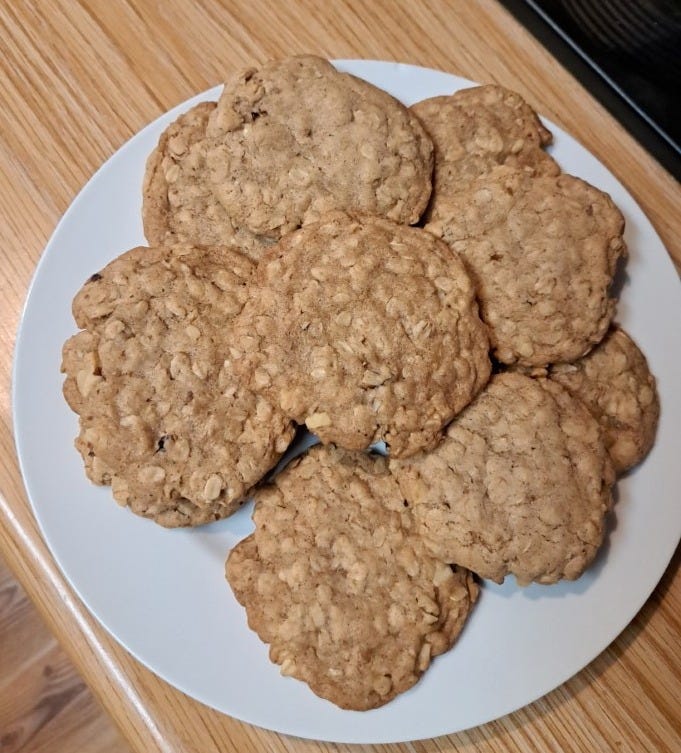
That’s when I started to question how long it had been since I’d eaten a cookie baked from scratch. Which led me to realize how long it had been since I’d baked anything.
I used to write a food blog. I used to develop recipes for brands like Bob’s Red Mill in exchange for free product. I used to go to food blogging conferences and fancy dinners sponsored by companies like Chobani. But I couldn’t remember the last time I’d baked anything.
To be fair, my cooking and baking activity dropped off after my kids left home to go to college. I attempted a series of “Dinner for Two” posts, but I didn’t find them interesting enough to keep me writing. The whole point of creating a food blog had been to encourage my kids to try new things—hence the series of posts tagged “Adventures in Produce”—and teach them how to cook for themselves. When people started to take the time to complain that I dared to write blog posts, rather than just provide free recipes1, my interest in food blogging disappeared altogether.
I was still in the kitchen on a regular basis, though. Mike hated cooking, so our deal was that I’d shop for and cook our evening meals; he’d clean up the kitchen afterward. That arrangement suited us both.
At least, until he started forgetting to use soap when he washed the dishes. And then he couldn’t remember where to put the clean things away.
This week, I read Kirbie Earley’s Substack post The Things Nobody Tells You About Dementia Caregiving and found myself nodding at each item on her list. True, true, absolutely true: “Your identity will get completely lost.”
In my case, that happened so gradually I didn’t even notice. I knew I was exhausted; it just made sense that I wasn’t doing some of the things I used to do. I’d replaced cooking and baking with ordering takeout and buying frozen meals, both to minimize clean-up time and reduce the amount of attention I had to divert from Mike.
But when I really thought about it, the list of things I wasn’t doing anymore—all the things I used to love—just kept growing: drawing, journaling, taking long walks, planning a garden . . . For some reason, I hadn’t gone back to doing any of those things since Mike moved into memory care last October, though I’ve actually had the time for them these past four-ish months.
Maybe my brain just hadn’t registered the change in my situation, I thought. Maybe that’s why it took me four months to think Hey, maybe I’ll bake a batch of cookies.
Or maybe, I thought, I’d just forgotten who I used to be, pre-dementia care.
That really shouldn’t have been such a big surprise. After six years without a moment to think about what you might like to do, anyone would forget to allow that thought to surface. I’d been focused on the things that absolutely had to get done for a long time, and there was never any shortage of those.
While the people who care about caregivers are quick to remind us to take care of ourselves, too, no one is telling us when that’s supposed to happen. Or how to make it happen, when we’re running on fumes and don’t need one more thing to do.
So it mostly just doesn’t happen. And our selves disappear as we narrow our lives to the essentials: we sleep when we can, eat when we must, do our best to stay hydrated. Some of us go to work and come back home to our second full-time job. We survive.
And we forget that a self beyond survival ever existed.
Last week, I heard an owl somewhere near my house. I ran to the deck beneath our giant oak tree, to see if I could find it—I’ve only spotted an owl one other time in the 20+ years we’ve lived here. This one flew off and landed in a neighbor’s tree when I came outside, though, spooked by my sudden arrival.
The next day, I heard it again. This time I made a calmer approach and it stayed where it was: a barred owl perched on a branch overhead. It stayed there all day, calling back and forth to another owl somewhere nearby.
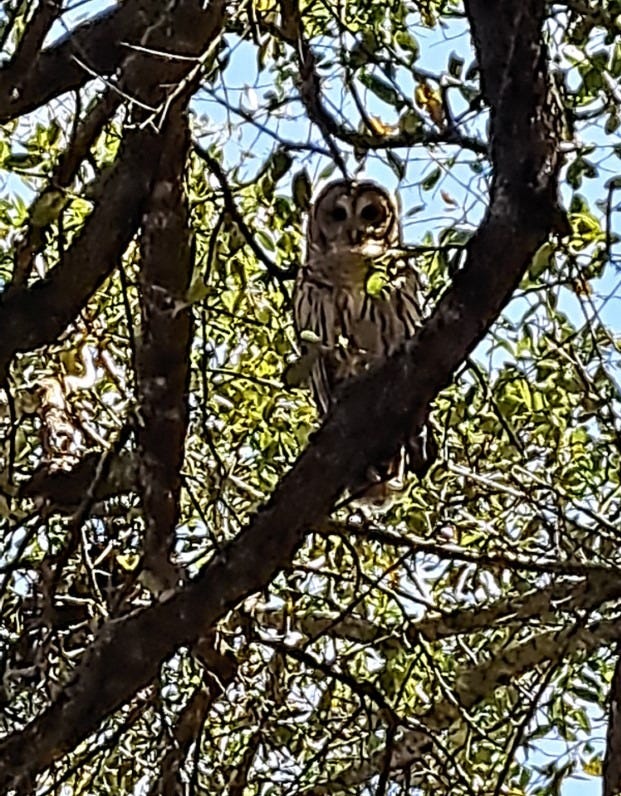
In Mexican folklore, owls symbolize death and destruction as well as wisdom and protection.2 At first, those ideas might seem contradictory—they did to me, anyway. But then I realized that the end of one thing is often what makes room for something new, and rebuilding with wisdom is always a better idea than reacting in the moment just because you can.
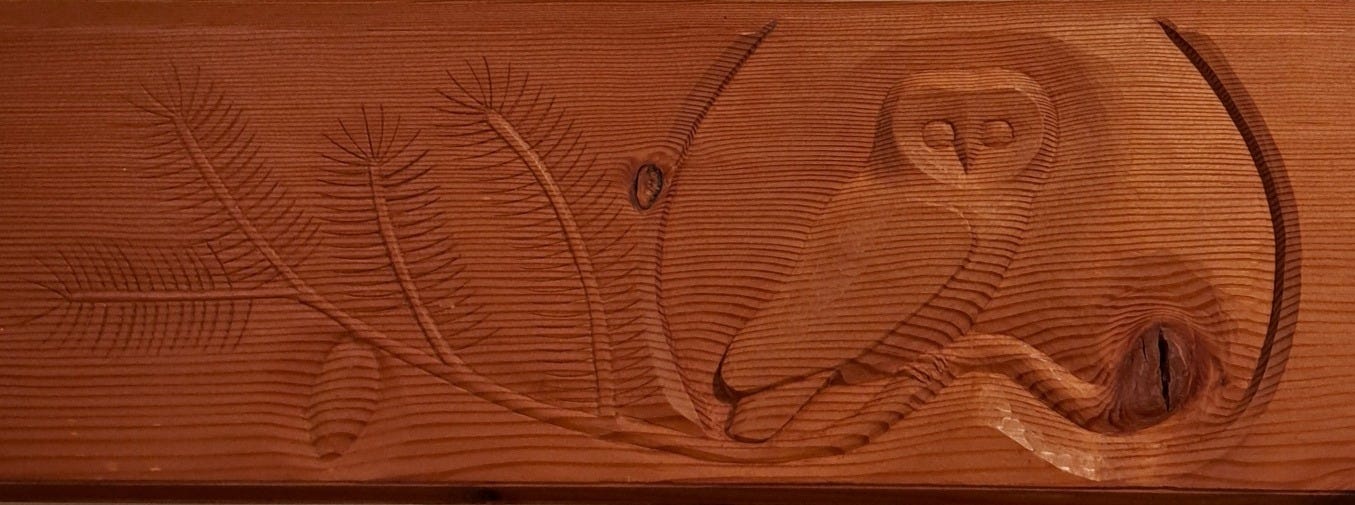
I also realized that I’m coming up on the one-year anniversary of my writing residency on the Hedgebrook property. I spent two weeks living in Owl Cottage, named in honor of a nesting pair of barred owls that once made their home in the Hedgebrook woods. I heard an owl one morning at Hedgebrook, still in bed and half asleep. At first I thought I might have dreamed it, but later that day another writer asked Did you hear the owl this morning? So I knew hadn’t been the only one to hear its greeting.
Owl Cottage is where I completed a draft of my memoir, the story of my journey from equal partner to dementia care provider—a story that now has a much different ending than the one I envisioned when I started writing it. A lot has happened in this last not-quite-one year.
So I’ve decided to think of that barred owl in my own backyard as a message from the spirit of Owl Cottage, a gentle reminder of who I am: a writer with a story to tell. That story didn’t begin with her partner’s dementia diagnosis, and it hasn’t ended yet.
These were the Wild West days of food blogging, before the Jump to Recipe button had been invented.
If you haven’t read Rudolfo Anaya’s lovely novel Bless Me, Ultima, let me recommend adding it to your TBR pile.
Love your posts, very therapeutic to hear I am not alone in losing myself to caregiving.
I love that your reflection on returning to yourself includes the act of returning to yourself again as writer. You do what you describe in the describing of it.